
The Emotional Weight of Clutter
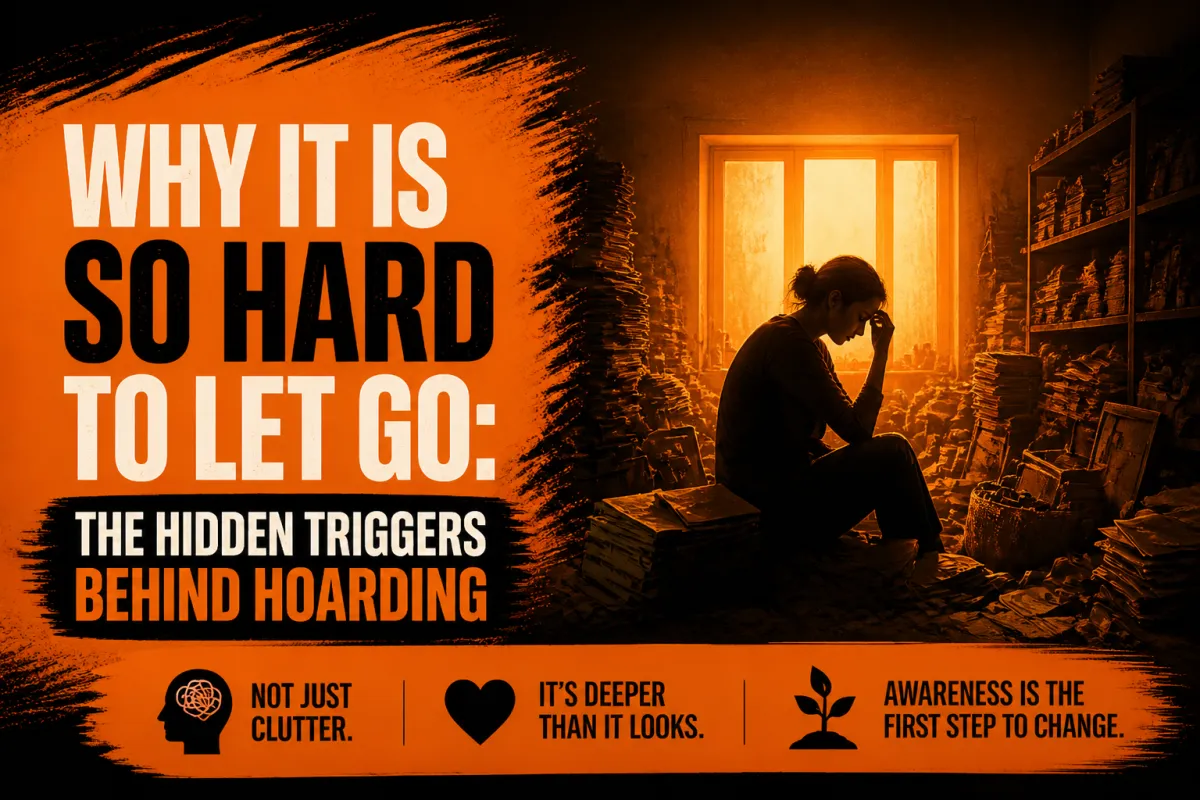
Why It Is So Hard to Let Go: The Hidden Triggers Behind Hoarding
Introduction:
Hoarding is often seen as a problem of clutter, but the real issue goes much deeper. Behind every item kept is a reason, and behind that reason is an emotional trigger. Understanding these triggers is the key to real change.
What you keep is not random. It is connected to your experiences, your fears, and your need for control.
Main Points:
1. Difficult Life Events Create Attachment
For many people, hoarding begins during challenging times. Loss, major changes, or financial stress can create a need for stability. Holding onto items can feel like holding onto control.
In uncertain moments, objects provide comfort. They become a way to cope with what feels overwhelming.
2. Fear Drives the Need to Keep Everything
Fear is one of the strongest triggers. The fear of needing something later. The fear of wasting money. The fear of losing something important.
These fears lead to keeping items just in case. Even when items are no longer useful, fear makes them feel necessary. Over time, this creates accumulation.
3. Emotional Connection to Memories
Items often represent more than their function. They hold memories, relationships, and identity. Letting go can feel like losing a part of your past.
This emotional connection makes decisions harder. You are not just letting go of an object; you are letting go of meaning.
4. Decision Fatigue Leads to Avoidance
Constant decision-making can become exhausting. Choosing what to keep and what to remove requires energy. When decisions feel overwhelming, avoidance takes over.
Instead of deciding, items are kept. Avoidance may feel easier in the moment, but it leads to more clutter over time.
Actionable Steps:
1. Identify Your Personal Triggers
Take time to reflect. Ask yourself why certain items are difficult to release. Awareness is the first step toward change.
2. Focus on Understanding Before Action
Do not rush to remove everything. Understand your patterns before making decisions.
3. Make Small Intentional Choices
Start with manageable decisions. Small actions build confidence and reduce overwhelm.
4. Seek Support When Needed
Talk to someone you trust or a professional. Guidance helps you process emotions and move forward.
Key Takeaways:
Hoarding is driven by emotional triggers, not just clutter
Fear, memory, and control play a major role in what you keep
Understanding your behavior leads to better decisions
Change begins with awareness and small, consistent actions
Call to Action:
You are not defined by what you hold onto. You have the ability to understand your patterns and make different choices.
Start by asking yourself why. Once you understand the reason, you gain the power to change your actions.
Because when you understand the why, you take control of what comes next.

YOUR MARYLAND CLEANING BESTIE
CONTACT INFORMATION:
301-793-5718


